
Young people from Lebanon and Italy came together through sport, dialogue and shared values, demonstrating how inclusion, legality and community engagement can help build pathways to peace.
At a time when conflict continues to affect, young people from different backgrounds came together in Southern Italy to speak a different language: that of sport, dialogue and peace.
This was the spirit of “Peace? A Child’s Game!”, an initiative promoted by the Archdiocese of Reggio Calabria-Bova, Diocesan Catholic Action and the Italian Sports Centre (CSI), which welcomed a delegation of adolescents from the Shatila Community Sport Center in Beirut from 12 to 17 June as part of the SUPER Metropolitan FUTSAL – A Goal for Peace programme.
The initiative represented far more than a sporting exchange. It provided an opportunity for young people from communities facing different challenges and vulnerabilities to build relationships, foster inclusion and share hope through a common experience.
Shatila, one of Lebanon’s best-known Palestinian refugee camps, faces significant social and economic challenges that affect the daily lives of many young people. Within this context, the Shatila Community Sport Center was established to use sport as a tool for empowerment and dialogue – values that resonated strongly with the welcoming programme organized in Calabria.
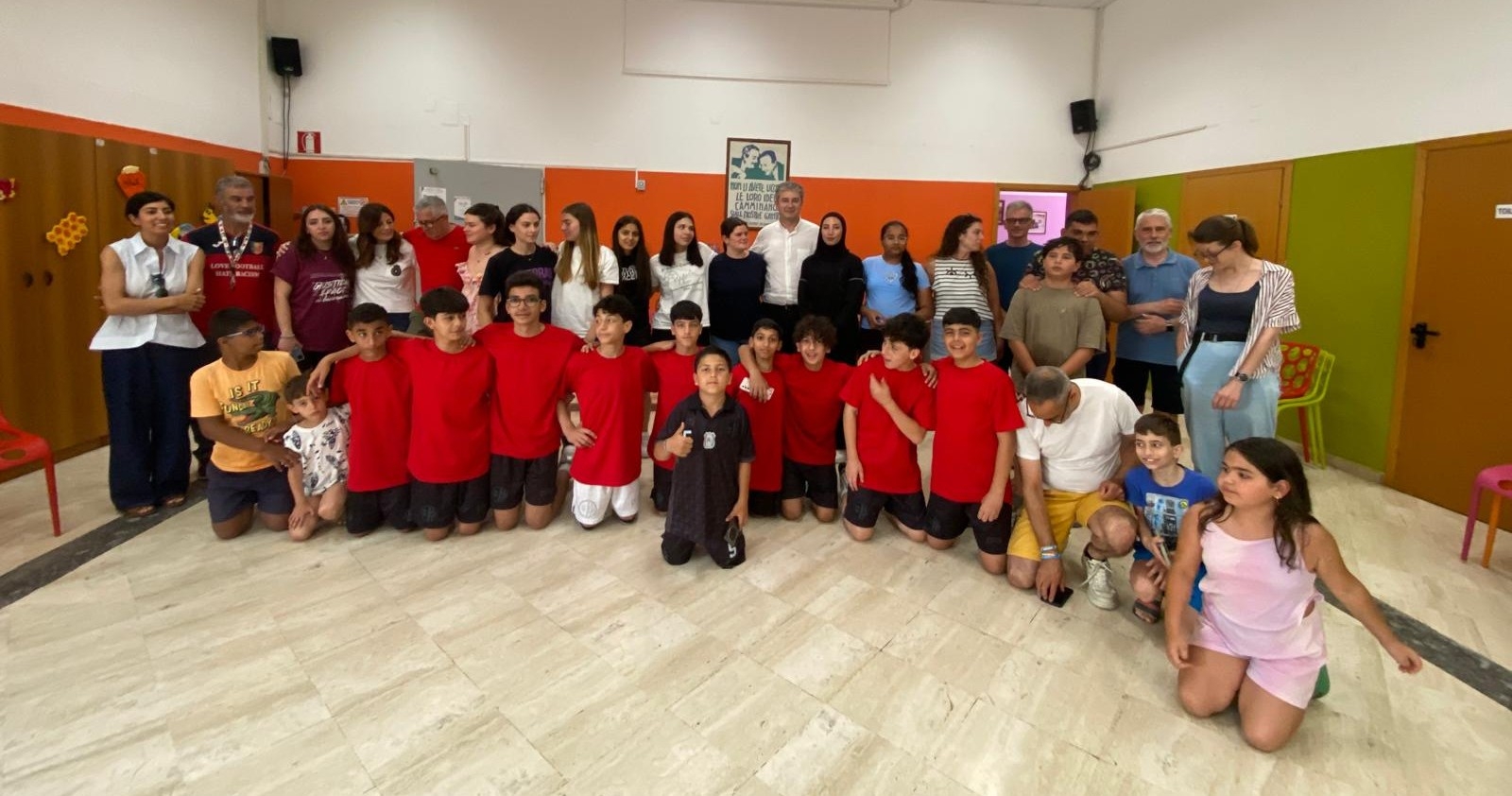
One of the most significant moments of the week took place at the **Don Milani Centre in Marina di Gioiosa Ionica**, where participants engaged in workshops, discussions and educational activities focused on peace, legality and civic participation.
During the event, Father Sergio Massironi, theologian at the Vatican Dicastery for Promoting Integral Human Development, highlighted the connection between the experience of the young participants and the broader values promoted by the Holy See. He expressed his appreciation for the initiative, describing it as a tangible expression of the Church’s ongoing commitment to promoting peace throughout the world.
The activities also brought together Francesca Chirico, President of Catholic Action of the Archdiocese of Reggio Calabria-Bova; Carmen Bagalà, Director of Caritas of the Diocese of Locri-Gerace; and educators from Ferrara involved in the Centre’s educational programmes.
The initiative also offered participants an opportunity to learn more about the work of the Don Milani Centre and the Ethical and Free School of Sports Education (SELES) project. Established in 2010 by the Don Milani Association, which has been active since 1995 in promoting legality, social inclusion and support for children and families, SELES combines sports training with educational pathways focused on active citizenship, inclusion and the prevention of organized crime culture.
The programme was made possible through the collaboration of CSI Reggio Calabria, Diocesan Catholic Action, the Archdiocese of Reggio Calabria-Bova, the Don Milani Association and numerous local organizations. It also received the patronage of the Metropolitan City of Reggio Calabria, the Municipality of Reggio Calabria and the United Nations Interregional Crime and Justice Research Institute (UNICRI), recognizing the value of sport as a tool for inclusion, community strengthening and the prevention of marginalization.
The week also featured the International Peace Tournament, hosted at the SELES Sports Centre, bringing together teams from Seles Gioiosa, the Santa Maria della Pietà Parish of San Luca, Seles Polistena and the Shatila Community Sport Center of Beirut.
The tournament took place in an atmosphere of celebration and friendship. The opening kick-off was performed by the Mayor of Gioiosa Ionica, Luca Ritorto, while the closing ceremony was attended by the Municipal Councillor for Sport, Enrico Tarzia. Among those coordinating the activities was Francesco Rigitano, a longstanding driving force behind the Don Milani and SELES projects.
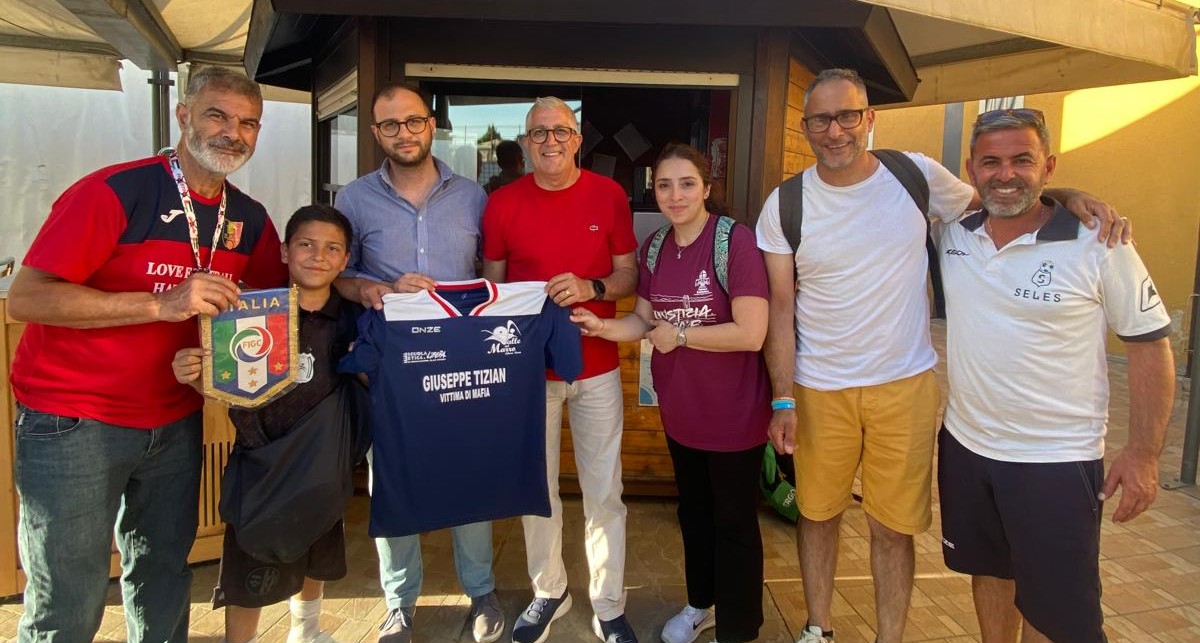
One particularly meaningful moment occurred when the coach of the Shatila team received an official SELES jersey bearing the names of innocent victims of organized crime. The symbolic gesture linked the message of peace with remembrance, justice and a shared commitment to building stronger communities.
The experience reflected the core values of the initiative. As noted by Archbishop Fortunato Morrone, Metropolitan Archbishop of Reggio Calabria-Bova, “In a time of war, these young people teach us that peace is built by playing together, not by fighting.”
A similar message was emphasized by Francesca Chirico, who described the initiative as “a synthesis of different worlds” and a concrete expression of a community walking together.
For Paolo Cicciù, Provincial President of CSI Reggio Calabria, the experience demonstrated once again that “sport is a bridge that unites, educates and heals,” restoring the game to its most authentic purpose.
For several days, Calabria became a small laboratory for peace, where young people from different cultures, histories and faiths demonstrated that dialogue remains possible and that even the simplest language – a ball rolling across a field – can help build bridges where others continue to erect walls.