
The United Nations Office of Counter-Terrorism (UNOCT) and the United Nations Interregional Crime and Justice Research Institute (UNICRI) convened a two-day training programme on “The United Nations Counter-Terrorism Architecture” on 25–26 March 2026 in New York.
The training programme brought together counter-terrorism focal points of Permanent Missions in New York as well as representatives from entities of the United Nations Global Counter-Terrorism Coordination Compact.
It was designed to help Member States prepare for the ninth review of the United Nations Global Counter-Terrorism Strategy (GCTS), to be negotiated and adopted by the General Assembly in the coming months.
Adopted by consensus in 2006, the GCTS remains the cornerstone of the United Nations’ global counter-terrorism framework. As the Strategy marks its twentieth anniversary, the upcoming review provides an opportunity for Member States to reaffirm their commitment to preventing and countering terrorism in all its forms and manifestations, addressing emerging threats, and refining the system-wide approach to implementation.
Over two days, the training provided participants with a comprehensive overview of the UN counter-terrorism architecture and facilitated discussions on key thematic areas, including:
The evolution and review process of the GCTS;
Mandates, coordination mechanism, and the role of the Global Counter-Terrorism Coordination Compact;
Current global terrorism threat landscape, including links to organized crime, and emerging challenges, such as those related to new technologies;
International law, human rights, and gender dimensions of counter-terrorism efforts; and
Practical examples of how the Strategy is operationalized.
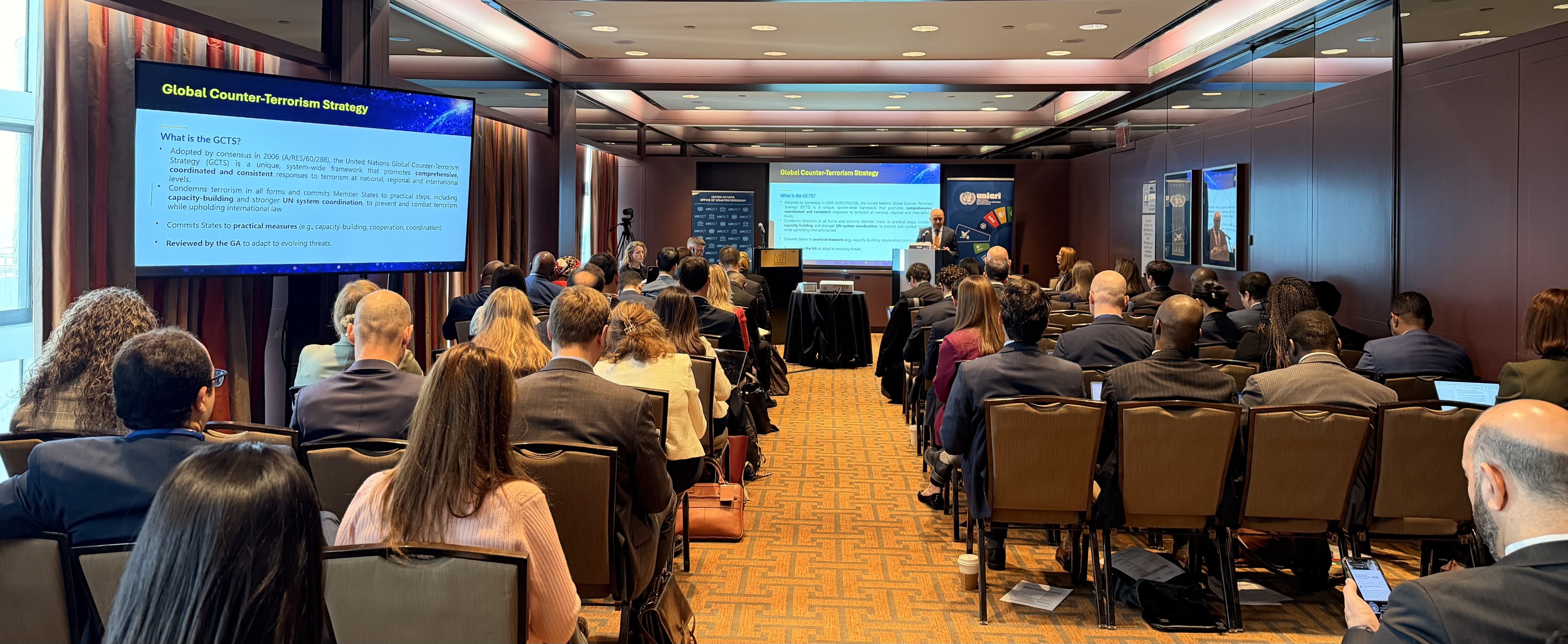
Reflecting the multi-stakeholder character of the United Nations’ counter-terrorism efforts, the programme featured lectures, interactive discussions and applied case studies delivered by UN officials, subject-matter experts, and external partners. A key theme was strengthening system-wide coherence, enhancing coordination under the Compact framework, and reinforcing a “One-UN” approach to supporting Member States in preventing and countering terrorism.
This initiative was supported through the United Nations Peace and Development Trust Fund, through the project on “Promoting Synergies and a One UN Approach to Policy Coordination through the UN Global Counter-Terrorism Coordination Compact”. UNOCT and UNICRI also appreciate the longstanding support of the State of Qatar to its coordination mandate.


