
South East and Eastern Europe strengthened coordination on chemical, biological, radiological and nuclear risks through a regional meeting, enhancing preparedness, strategic alignment and cooperation under the EU-funded CBRN Centres of Excellence Initiative.
Optional teaser
As CBRN risks evolve across Europe, stronger coordination and more structured engagement with donors are essential to ensure effective and sustainable responses.
From risk identification to coordinated action
Chemical, biological, radiological and nuclear (CBRN) risks in South East and Eastern Europe (SEEE) are increasingly shaped by evolving security dynamics, including geopolitical tensions, environmental pressures and emerging technological threats.
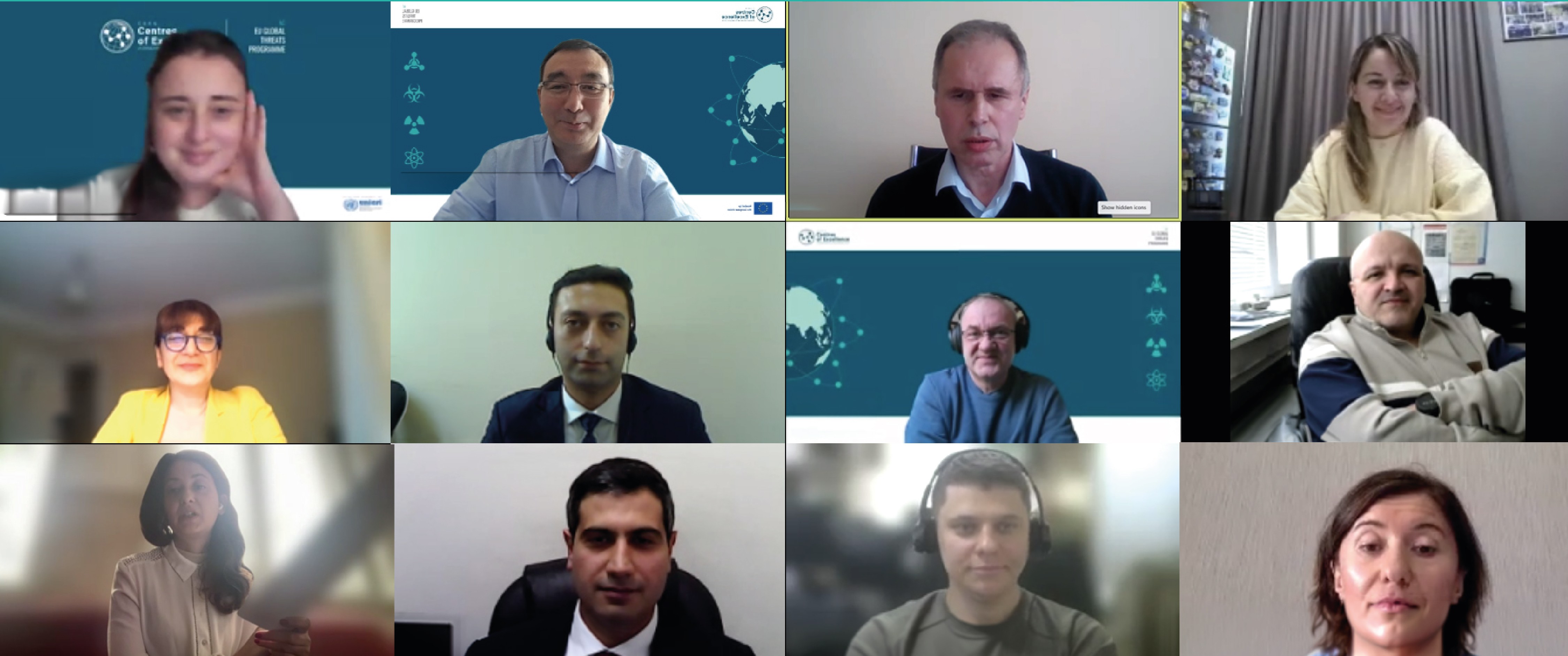
To address these challenges, the 26th CBRN National Focal Point Strategic Coordination Meeting, held on 23 March 2026, brought together representatives from the region (Albania, Armenia, Azerbaijan, Bosnia and Herzegovina, Georgia, Moldova, Montenegro, North Macedonia, Serbia, and Ukraine) and international partners to strengthen coordination, align priorities and enhance preparedness. The meeting was funded by the European Union and organised within the framework of the European Union CBRN Centres of Excellence Initiative, with the support of UNICRI.
Discussions reflected a clear transition from identifying risks to developing coordinated, actionable and fundable priorities, particularly in view of upcoming donor engagement.
Strengthening national coordination and regional alignment
The meeting reinforced national ownership while promoting regional cooperation. Several countries highlighted progress in strengthening inter-agency coordination mechanisms involving health, defence, interior and justice sectors.
Country examples illustrated different approaches to coordination and implementation. Armenia reported the establishment of a national coordination mechanism at deputy minister level, aimed at ensuring stronger political oversight and effective implementation. Georgia highlighted how long-term institutionalised coordination can support consistency and sustainability over time.
At the regional level, the CBRN Regional Action Plan continues to provide a shared framework, closely linked with national action plans. This interaction supports alignment across countries while enabling them to present more coherent priorities to international partners and donors.
From gaps to fundable priorities
A key outcome of the meeting was the shift towards resource mobilisation and donor-oriented planning. Countries emphasised the need to present priorities in a clearer and more structured manner, including through simplified formats, prioritisation and indicative cost estimates. Smaller, modular and realistic project proposals were identified as more effective in attracting funding.
Participants also acknowledged that effective donor engagement extends beyond formal presentations, with informal exchanges and follow-up playing an important role in mobilising support.
Across the region, countries reported similar challenges, including gaps in detection and early warning systems, limited investigative and forensic capacities, and the need to strengthen emergency response coordination. Structural priorities such as sustainable training systems, institutional coordination and alignment with international legal frameworks were also highlighted.
Emerging risks are gaining increasing attention, including chemical safety and security, biosecurity and pandemic preparedness, and the intersection of cyber threats with critical infrastructure. Moldova’s recent environmental crisis, linked to the impact of the war in Ukraine, further illustrated how CBRN risks are increasingly interconnected with broader geopolitical and environmental dynamics.
Advancing regional solutions and engagement
The discussions underscored the growing importance of regional solutions to address shared and resource-intensive challenges. Joint training platforms, shared infrastructure and coordinated response mechanisms were identified as practical approaches to enhance efficiency, avoid duplication and maximise impact.
At the same time, participants emphasised that regional cooperation depends on trust, alignment and sustained engagement, and remains a work in progress.
A key point of discussion concerned the balance between regional and national priorities. While regional frameworks help demonstrate coordination and strategic direction, national proposals provide concrete entry points for donor support. Combining both approaches allows countries to remain flexible while maintaining coherence.
Country experiences further illustrated this dynamic. Georgia demonstrated how integrating project outcomes into national systems can enhance sustainability, while Moldova highlighted the growing influence of conflict, infrastructure vulnerabilities and environmental risks on the CBRN landscape. Other countries emphasised the importance of training, exercises and incremental progress in strengthening capacities over time.
Through their continued commitment, the countries of South East and Eastern Europe demonstrate the importance of sustained cooperation in preventing, detecting and responding to complex chemical, biological, radiological and nuclear-related threats.
Background
This action was funded by the European Union in the framework of the EU CBRN Centres of Excellence Initiative. This activity contributes to ongoing efforts to strengthen partner countries’ capacities in investigating, prosecuting and adjudicating CBRN crimes. It supports the development of sustainable national training systems, enhances inter-agency cooperation and promotes alignment with international standards.
To know more: EU Global Threats Programme – EU CBRN Centres of Excellence Initiative


