Improving first response to terrorist attacks - Field exercise in Lebanon
Image
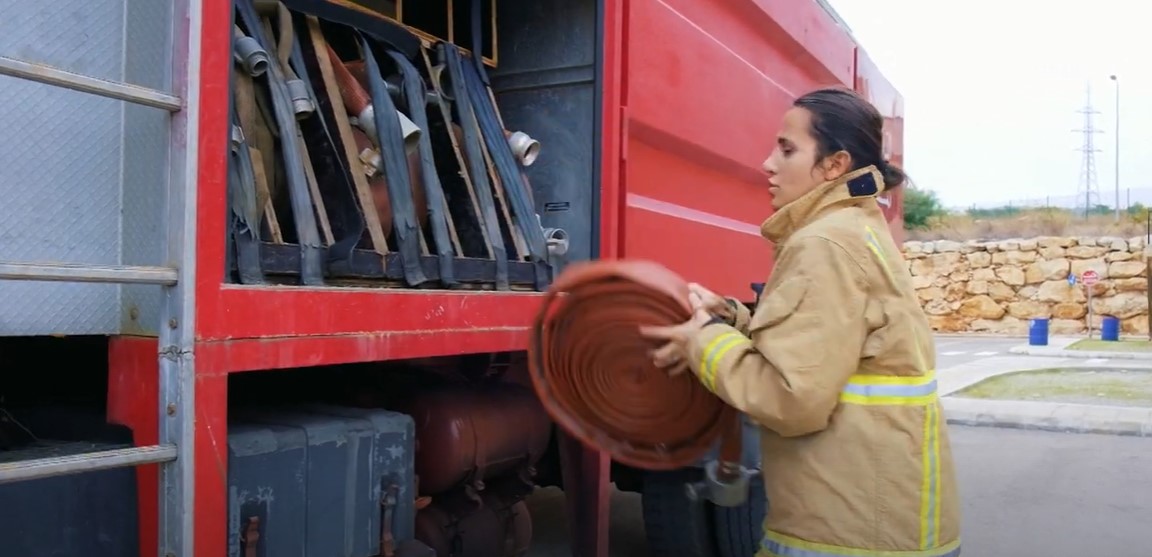


In today’s globally interconnected, technologically advanced society, science (and Chemistry as a sub-discipline) is fundamental to our daily life. While women continue to play an increasingly important role in the chemical sciences, they are still underrepresented in many important chemical safety and security functions.
To address this gap, amplify women’s voices and promote opportunities to increase their engagement in this field, the Organisation for the Prohibition of Chemical Weapons (OPCW) and UNICRI have developed the Women in Chemistry network: an expert network in which women in chemical safety and security can share their expertise. So far, over 150 women from 60 countries have joined the network.
Objectives & activities
One of the first outputs of the Women in Chemistry network has been the Compendium on “Engagement and Advancement of Women in Chemical Safety and Security”. The Compendium —produced by UNICRI with the support of OPCW and the generous funding of the European Commission— aims to provide policymakers and practitioners in the field of chemistry with guidance to promote gender inclusivity in the chemical safety and security sector through the identification of best practices in recruiting, training and promoting gender-inclusive careers. To analyse the accessibility of chemical safety and security careers for women and produce the Compendium, UNICRI carried out quantitative and qualitative research through the Women in Chemistry network.
The Compendium is part of the Women in Chemistry Project, funded by the European Union and led by OPCW. It builds upon the achievements of the annual symposium on Women in Chemistry implemented by OPCW since 2016. Through a series of seminars, presentations and question and answer sessions, these symposia highlight contributions made by women in the field of peaceful chemistry; raise awareness of education and capacity development opportunities for women in peaceful chemistry; and promote international solidarity and cooperation.
UNICRI and the OPCW will continue to leverage on the newly established “Women in Chemistry” network by connecting members with career progression opportunities and by providing a regular platform for discussions and exchange of knowledge and expertise on chemical safety and security.
For more information on the Women in Chemistry Symposium, please see: https://www.opcw.org/resources/capacity-building/international-cooperation-programmes/women-chemistry

Compendium of Best Practices on the Engagement and Advancement of Women in Chemical Safety and Security |
Call for women in chemistry! UNICRI and OPCW
OPCW and UNICRI empower women in chemistry and launch a compendium of best practices

The proliferation of chemical, biological, radiological, and nuclear (CBRN) weapons, materials and their means of delivery represents a pressing threat to international peace and security. Actors involved in the financing of such activities look to exploit loopholes in the global financial system to move and raise funds to develop CBRN programmes.
These actors can range from high profile entities (for instance state actors and/or state proxies) to complex networks of criminal enterprises, front companies, and professional intermediaries conducting operations on their behalf. This threatening scenario is further exacerbated by malicious actors’ ability to conceal illicit schemes behind operations that are allegedly legitimate.
The majority of states appear to have a limited understanding of how vulnerable their economy is to proliferation financing activities, especially when the link between proliferation actors and their financial activities is indirect, due, for instance, to the involvement of intermediaries or front companies.
As part of its Strategic Framework to help achieve the 2030 Sustainable Development Goals, UNICRI assists partner countries to detect, prevent and counter CBRN proliferation financing and any associated organized criminal activities through the provision of capacity-building activities, such as sustainable training programmes. UNICRI also supports Member States by producing and disseminating knowledge on the evolution of CBRN proliferation financing strategies and the connections between different players in illicit financing schemes.
Thanks to the generous support of the United States Defense Threat Reduction Agency, UNICRI has launched the United Nations’ first global CBRN counter-proliferation finance and sanctions evasion programme. Through capacity-building activities, the programme aims to effectively disrupt the financing of illicit WMD programmes, thereby significantly reducing proliferation threats on a global scale. Previous work by UNICRI in this area includes the project Strengthening Capacities to Identify and Mitigate CBRN Proliferation Financing Risks in Southeast Asia. Thanks to the generous contribution of the United Kingdom’s Foreign and Commonwealth Development Office (FCDO), this project helped to improve understanding of CBRN proliferation financing risks and to enhance awareness of and compliance with international standards and sanctions.
Download the brochure about the Counter-Proliferation Finance and Sanctions Programme

 Related news
New report: CBRN Proliferation Financing: A Perspective from Southeast Asia

UNICRI, in cooperation with the United States Federal Bureau of Investigation, administers the International Network on Biotechnology (INB), a global network of academic and research institutions committed to advancing education and raising awareness about responsible life science. The INB experts exchange views and possible actions to support governments and relevant sectors of civil society (including academia, research institutions, technology companies) with a focus on emerging developments in the life sciences and biotechnology.

In 2016, UNICRI developed the Knowledge Center “Security Improvements through Research, Technology and Innovation" (SIRIO) in Geneva. The Center collaborates with a diverse range of partners, including industry and research institutions (from both the public and private sectors) as well as governmental and intergovernmental entities.
The primary purpose of SIRIO is to analyse and promote knowledge and technology-based solutions aimed at addressing emerging security risks.

The first hours and days following a chemical, biological, radiological, or nuclear (CBRN) event are essential to assess the problem, mobilize appropriate national resources and experts and provide an adequate and timely international response. This cross-sectoral assistance is crucial to save lives, ease suffering, and mitigate the effects of contamination; it should therefore reach the crisis area in the shortest possible timeframe.

Successfully prosecuting a chemical, biological, radiological or nuclear (CBRN) crime, such as the deliberate acquisition, stockpiling, production, transfer, or use/misuse of CBRN material, is a uniquely challenging process.
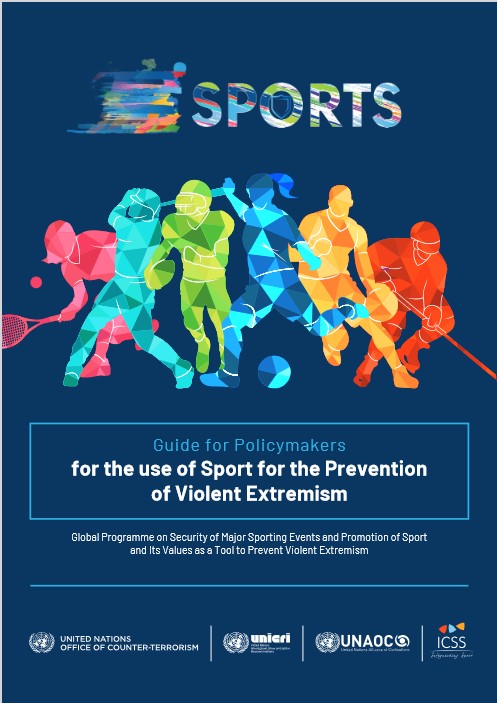
The Guide has been designed by the United Nations Office of Counter-Terrorism (UNOCT), the United Nations Alliance of Civilizations (UNAOC), the United Nations Interregional Crime and Justice Research Institute (UNICRI) and the International Centre for Sport Security (ICSS) within the framework of the Global Programme on Security of Major Sporting Events and Promotion of Sport and Its Values as a Tool to Prevent Violent Extremism (PVE).
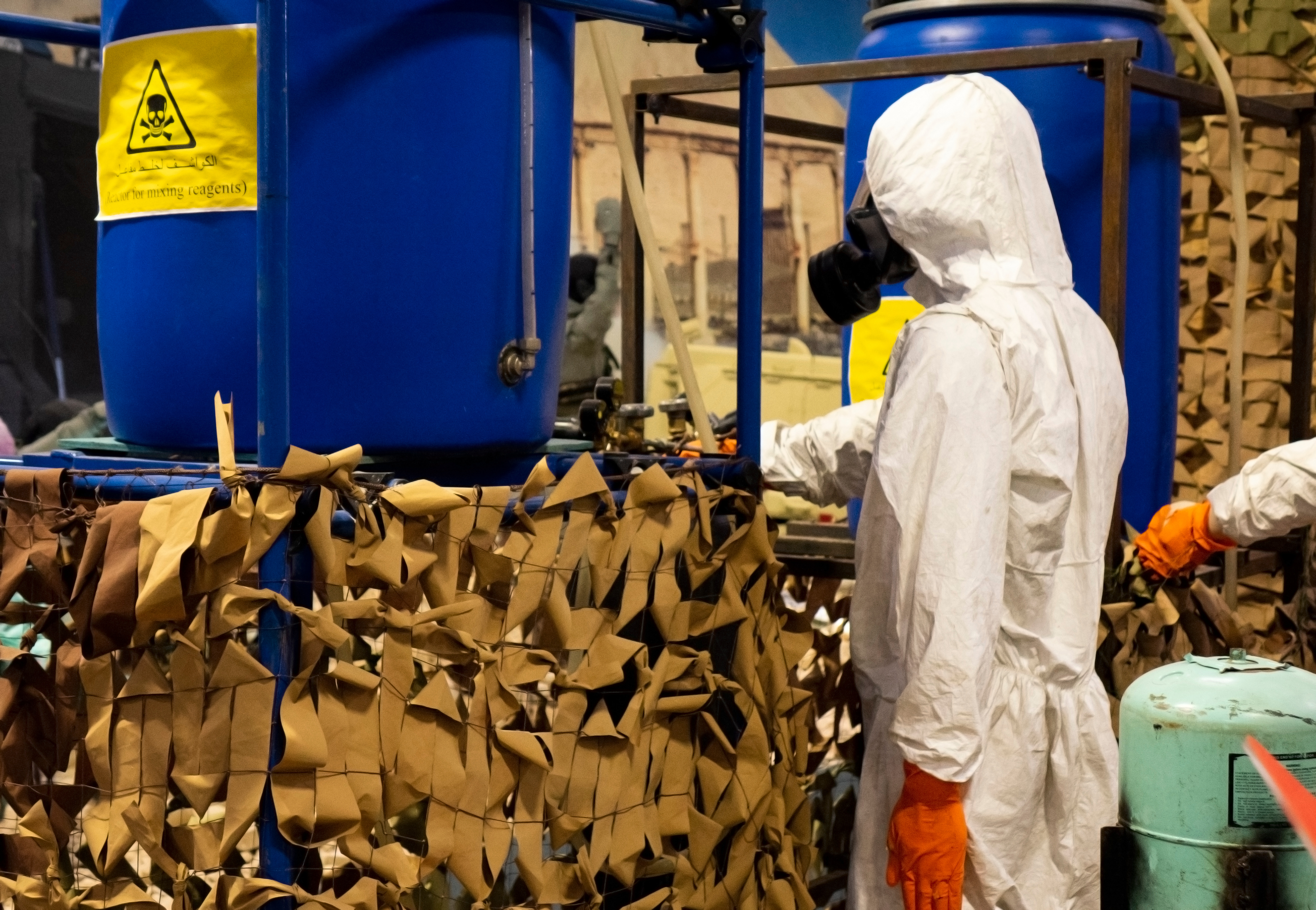
“Preventing and Responding to the Use of Chemical Weapons by Non-State Actors for Terrorist Purposes in Indonesia” is a project implemented in Indonesia by the United Nations Office on Drugs and Crime (UNODC) in partnership with UNICRI, and in collaboration with the Organisation for the Prohibition of Chemical Weapons (OPCW), and the International Criminal Police Organisation (INTERPOL).